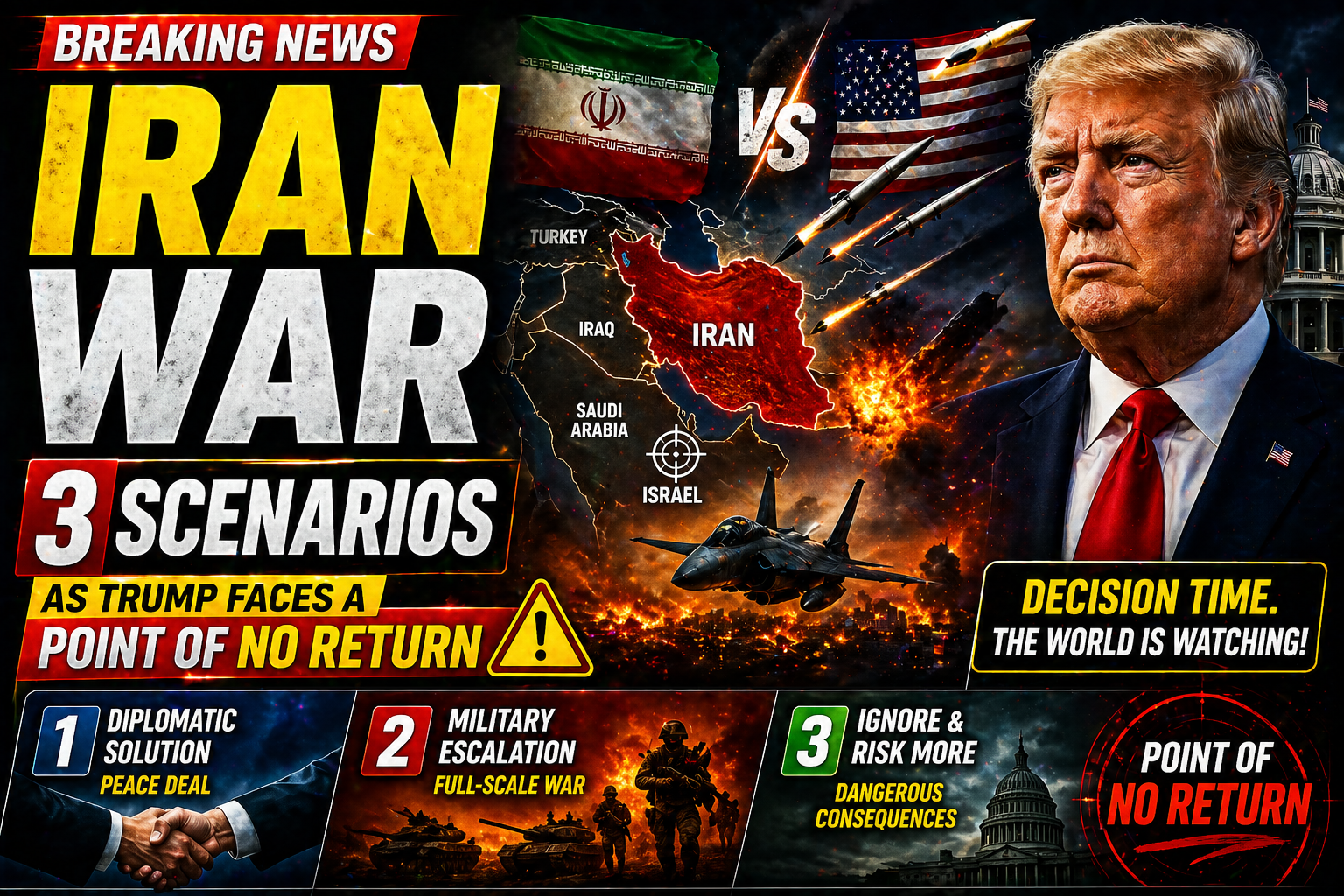
The Iran War has reached a critical turning point.
With a May 1 deadline under the War Powers Act approaching fast, President Donald Trump faces one of the most defining decisions of his presidency. This is no longer just about military strikes or naval blockades. It’s about constitutional authority, global oil stability, and political survival.
If you’re trying to understand what happens next in the Iran War, here’s the simple truth:
There are only three realistic outcomes:
- A peace deal
- Congressional approval for escalation
- Or legal limbo
Let’s unpack everything clearly.
Why May 1 Is a Make-or-Break Deadline in the Iran War
Under the War Powers Resolution of 1973, a U.S. president can deploy military forces abroad for 60 days without Congressional approval.
After that?
Congress must either:
- Declare war
- Pass an Authorization for Use of Military Force (AUMF)
- Or force troop withdrawal
Right now, Trump does not have Congressional approval for extended action in the Iran War.
That makes May 1 more than symbolic. It’s legally binding.
Past presidents, including Barack Obama during Libya operations, stretched this law. But every time it triggered political backlash.
This time, the stakes are much higher.
For deeper political coverage, read our analysis on
👉 US Midterm Elections 2026: Key Foreign Policy Issues to Watch
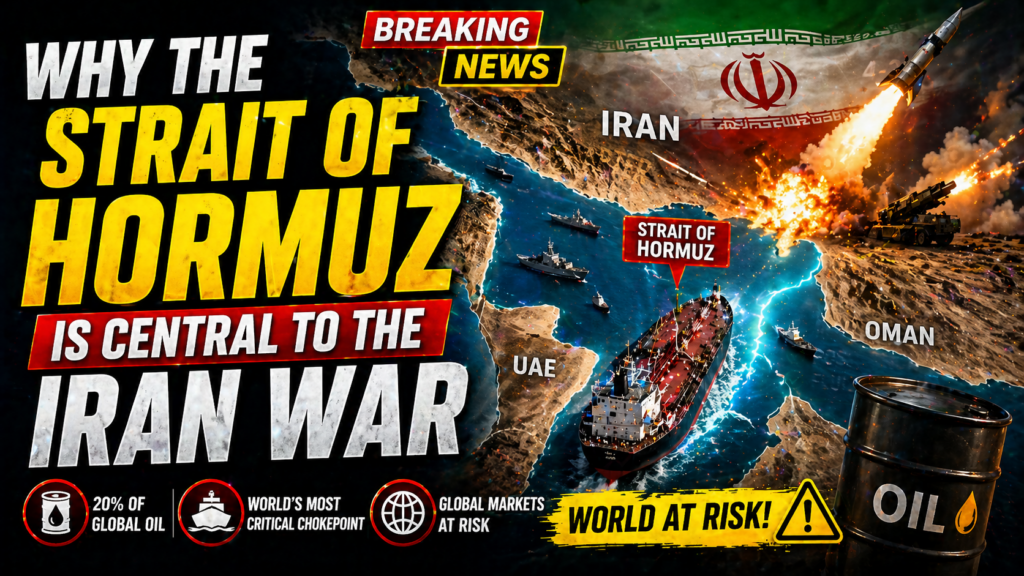
Why the Strait of Hormuz Is Central to the Iran War
You’ve probably heard this name repeatedly: Strait of Hormuz.
Here’s why it matters.
According to the U.S. Energy Information Administration (EIA), about 20% of global petroleum liquids consumption passes through this narrow waterway.
That’s massive.
If the Iran War disrupts this route:
- Oil prices spike
- Inflation rises
- Global markets react instantly
- Energy-importing countries face pressure
India, for example, sources a significant portion of crude oil from West Asian refineries. China also relies heavily on this region.
So when the U.S. enforces a naval blockade in Hormuz, this becomes a global issue — not just a regional conflict.
For more energy market insights, read:
👉 How Global Oil Prices React to Middle East Conflicts
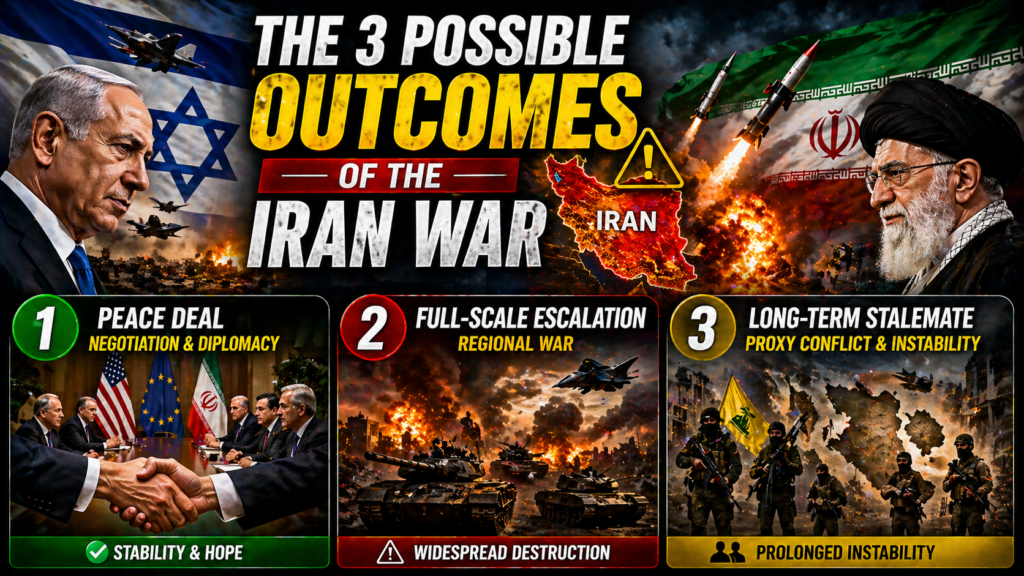
The 3 Possible Outcomes of the Iran War
Let’s break this down simply.
1️⃣ A Peace Deal Between the US and Iran
This is the cleanest solution.
Reports suggest Iran has floated conditions that include:
- Ending U.S. air strikes
- Lifting the naval blockade
- Beginning phased diplomatic talks
In exchange:
- Iran reopens full maritime access
- De-escalates military posture
- Engages in long-term negotiations
If Trump secures a deal, he can:
- Bring U.S. troops home
- Claim he avoided a “forever war”
- Rebuild military stockpiles
- Present a strategic victory before midterms
From a political messaging standpoint, this would be powerful.
✅ Why This Works Politically
- Voters generally favor de-escalation
- Military fatigue is real
- Economic stability matters before elections
❗ Probability: Low but Possible
Negotiations require both sides to declare victory. That’s difficult after weeks of intense rhetoric.
But diplomacy often surprises.
For background on US-Iran diplomacy history, visit:
🔗 https://www.state.gov/u-s-relations-with-iran/
2️⃣ Congress Approves Continued Military Action
This option requires an AUMF.
An Authorization for Use of Military Force allows the president to continue military operations without formally declaring war.
Historically, AUMFs have been used in:
- Afghanistan (2001)
- Iraq (2002)
If Republicans rally support, an AUMF could pass with a simple majority in both chambers.
That would legally extend the Iran War beyond May 1.
What That Could Mean:
- Continued naval blockade
- Expanded air operations
- Strategic targeting
- Possibly preparing ground options
✅ Probability: Medium
Republicans may support extension. Democrats strongly oppose escalation.
Politically explosive? Absolutely.
3️⃣ Legal Limbo – The Deadline Is Ignored
This is the most chaotic option.
The May 1 deadline passes.
No AUMF. No peace deal.
But operations continue anyway.
This creates a constitutional gray zone.
Courts historically avoid interfering in active military matters. But politically, this exposes Trump to:
- Legal scrutiny
- Media criticism
- Campaign vulnerabilities
- Constitutional debates
For deeper analysis on constitutional limits, read:
👉 Understanding Presidential War Powers in 2026
❗ Probability: Risky but Possible
This buys short-term flexibility.
But long-term? It creates instability.
The Military Readiness Factor
Another major issue in the Iran War is resource consumption.
Reports indicate heavy use of:
- Tomahawk cruise missiles
- Patriot interceptors
- Naval deployment fleets
According to the Congressional Budget Office, overseas military operations can cost billions monthly depending on scale.
Sustained conflict impacts:
- Stockpile replenishment
- Indo-Pacific readiness
- Budget allocations
Modern warfare drains logistics fast.
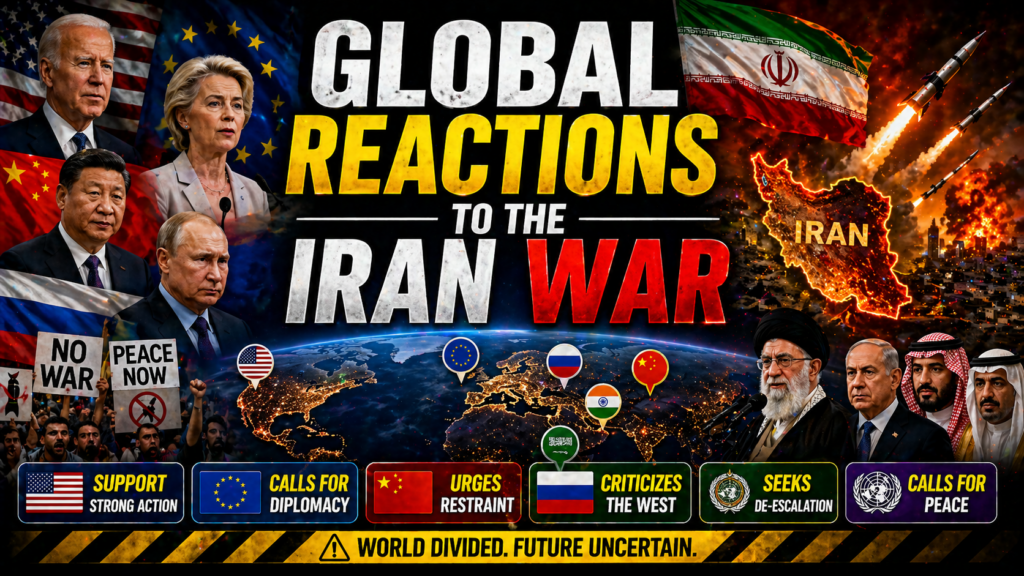
Global Reactions to the Iran War
The world is watching carefully.
🇪🇺 Europe
European leaders call for immediate de-escalation and revival of nuclear negotiations.
🇨🇳 China
China’s energy security depends heavily on stable oil flow from the region.
🇮🇳 India
India remains highly sensitive to oil price volatility.
Oil traders react within hours to any escalation.
Even rumors can spike prices.
How the Iran War Could Affect You
You may not follow geopolitics daily.
But the Iran War can impact:
- Gas prices
- Inflation
- Stock markets
- Defense stocks
- Election narratives
Energy prices affect transportation. Transportation affects food costs.
It’s all connected.
For economic breakdowns, check:
👉 How Geopolitics Impacts Everyday Inflation
Could This Become Another “Forever War”?
Trump built political capital on avoiding endless wars.
If this conflict stretches longer than expected, critics may revive the “forever war” narrative.
That’s why the May 1 deadline matters so much.
It forces clarity.
No more strategic ambiguity.
The Bigger Strategic Game
Some analysts suggest the Iran War ties into broader objectives:
- Maritime chokepoint control
- Energy leverage
- Strategic positioning near China
- Middle East power restructuring
Whether intentional or reactive, these moves reshape global alignment.
History shows regional wars often create global ripple effects.
The Strait of Hormuz isn’t just water.
It’s leverage.
Conclusion: A Defining Moment in the Iran War
The Iran War has reached a decisive crossroads.
Three paths remain:
- A peace deal
- Congressional authorization for escalation
- Legal uncertainty
Each path carries consequences — political, economic, and global.
May 1 isn’t just another date.
It’s a constitutional checkpoint.
It’s an economic pressure valve.
And it could define the direction of U.S. foreign policy heading into elections.
If you feel uncertain about what happens next — that’s understandable.
This is high-stakes geopolitics unfolding in real time.
Stay informed. Stay analytical. And follow ongoing updates at newzeefy.com for expert-level breakdowns without the noise.
FAQs
What is the War Powers Act in the Iran War?
It limits the president to 60 days of military action without Congressional approval.
Why is the Strait of Hormuz important in the Iran War?
It carries about 20% of global oil supply, making it strategically critical.
Can Congress stop the Iran War?
Yes, by refusing to authorize continued military action.
What is an AUMF?
An Authorization for Use of Military Force allows continued military operations without a formal war declaration.
Will the Iran War increase oil prices?
Yes, escalation or blockade disruption could significantly impact global oil markets.