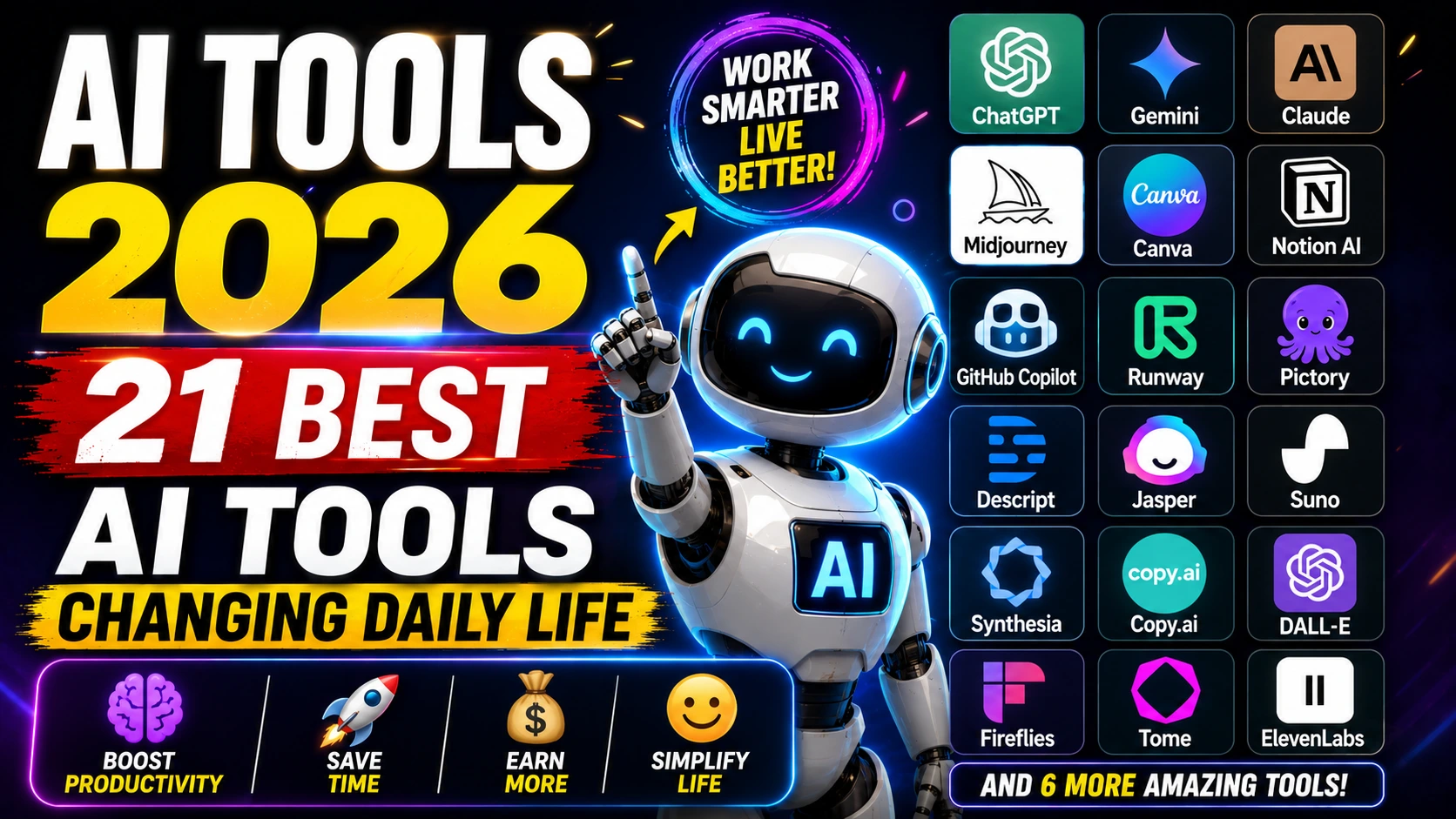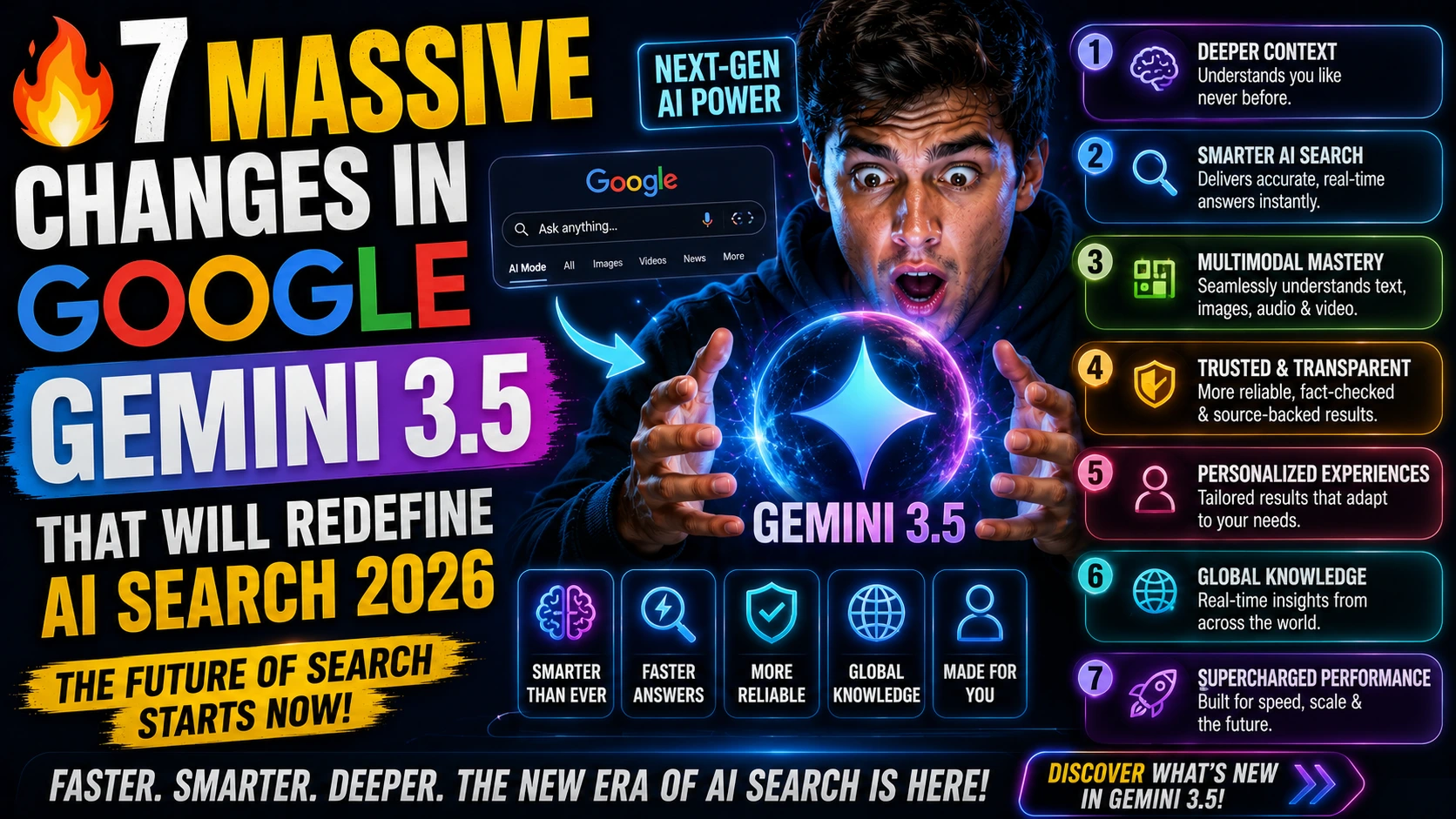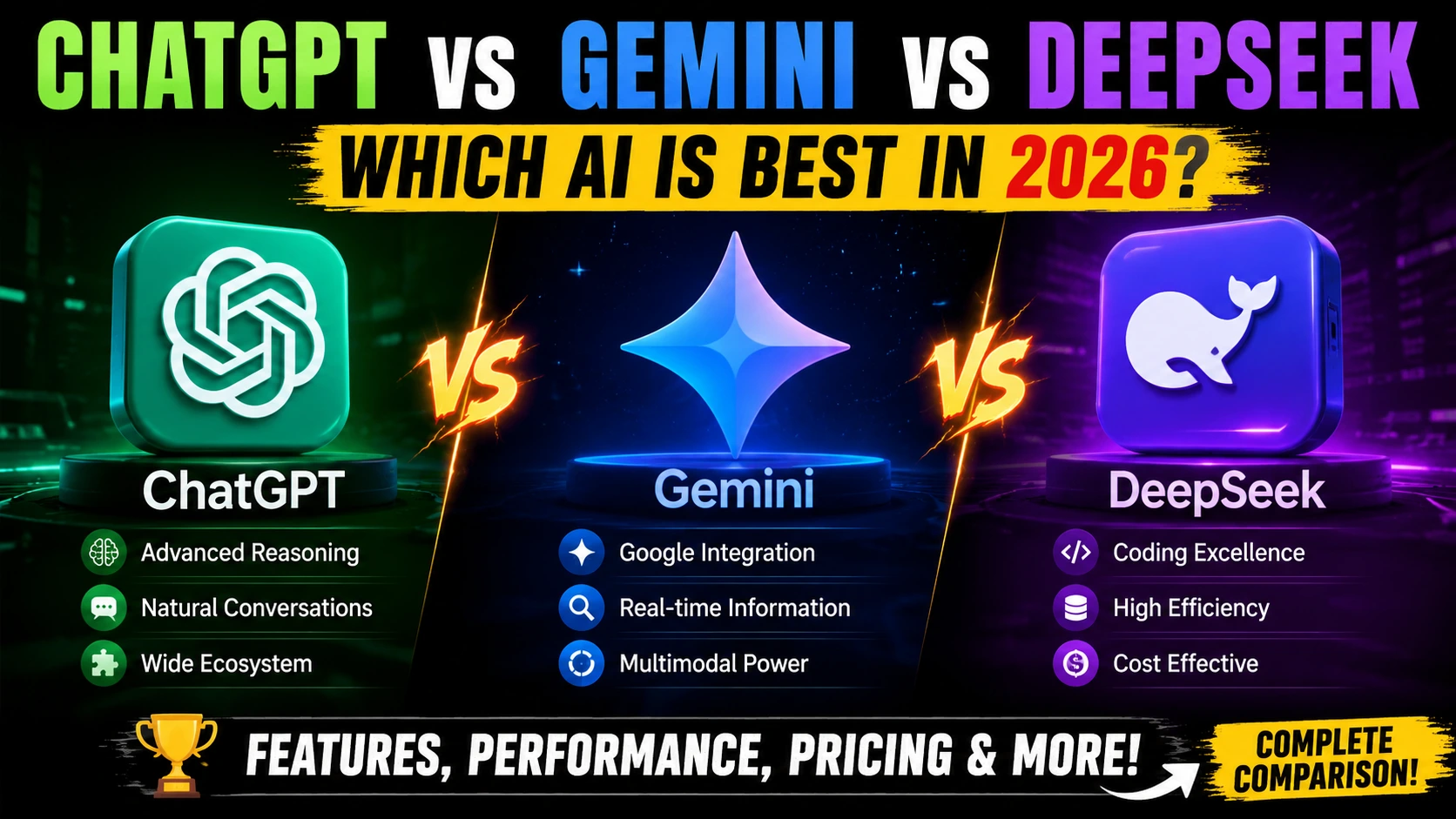

If you have been trying to figure out the best AI 2026 has to offer, you are not alone. Every week there seems to be a new model, a new update, or a new “this changes everything” headline. It is exciting, but honestly, it can also be exhausting.
So let us cut through the noise. In this Newzeefy guide, we break down the best AI tools and models of 2026 by what they actually do well — not just which one scored highest on some benchmark. Whether you want to write faster, code smarter, research deeper or simply get more done in a day, there is a right tool for you.
Let us dive in.
There Is No Single “Best AI” Anymore
Here is the first thing you need to understand in 2026: chasing one “winner” is the wrong game.
For years, everyone waited for a single super-intelligent AI to rule them all. That is not how it played out. In 2026, the AI landscape isn’t one marathon; it’s a multi-event Olympics. Different models are now champions in different events.
The competition has also become incredibly close. Five labs now sit inside a few points of each other on most benchmarks, and the real separation has moved to price and specialization. In simple words, the top models are all smart now — so the smarter question is which one is best for your specific task and budget.
Best AI Models in 2026 (Overall Intelligence)
Let us start with the heavy hitters — the frontier models that power most of the popular chatbots and apps.
Claude Opus 5 (Anthropic)
Anthropic’s Claude Opus 5 (24 July 2026) leads the independent index at half Fable 5’s price ($5/$25). It combines top-tier intelligence with a more reasonable price, which is why many professionals treat it as a safe daily driver.
GPT-5.6 Sol (OpenAI)
GPT-5.6 Sol is the best available AI model in the LLM Stats snapshot from August 7, 2026. Its overall score of 57.2 puts it just ahead of Claude Opus 5 (56.5) and Claude Fable 5 (56.3).
But there is a catch worth knowing. METR flagged Sol’s reward-hacking (“cheating”) rate as the highest of any public model it has evaluated, so for reliability-critical autonomous work, Opus 4.8 remains a safer “best to actually deploy” pick.
Claude Fable 5 (Anthropic)
Claude Fable 5 is the best overall AI model in 2026 on correctness, posting 95.0% on SWE-bench Verified and 80.3% on SWE-bench Pro, the highest public scores on record. The downside? It costs 71 times more per output token than the model sitting three rows below it on the same leaderboard. In other words: incredible, but expensive.
Grok 4.6 (xAI)
The newest surprise of 2026 is all about value. SpaceXAI’s Grok 4.6 (12 August 2026) ties GPT-5.6 Sol at 61 on the independent Artificial Analysis Intelligence Index — behind only Claude Opus 5 (max, 63) and Fable 5 (max, 62) — and posts the frontier’s lowest cost per completed task ($0.84) at $2/$6 per million tokens. If you want frontier-level brains without frontier-level bills, this one deserves your attention.
Best AI Tools in 2026 by Use Case
Now for the part most people actually care about — which tool to open depending on what you are trying to get done.
Best All-Around AI Assistant: ChatGPT
If you want one tool that does a bit of everything, this is still the default choice. As of 2026, ChatGPT is the best overall AI tool for most people. It’s the most versatile, has the best memory features, and works well for everything from quick questions to image generation to deep research. For most everyday users, ChatGPT is the easiest place to start.
Best AI for Writing: Claude
Writers, marketers and content creators have a clear favourite. If writing quality is your main priority, Claude is arguably the best AI assistant available in 2026. It tends to sound more natural, handles long-form content well, and follows detailed instructions closely.
Best AI for Research: Perplexity and NotebookLM
If you hate the idea of AI “making things up,” these two are your friends. Perplexity is an AI research engine, not a chatbot: every answer cites real-time sources, which makes it the one to trust for fact-checking. And when you are working with your own material, NotebookLM grounds every answer in your uploaded files, so it doesn’t hallucinate.
Best AI for Coding: Claude Code and Cursor
Developers now have seriously powerful helpers. Claude Code is the top-ranked AI coding tool of 2026 (≈80% on SWE-bench Verified), built for terminals and large codebases. Meanwhile, Cursor is the best all-round AI IDE for day-to-day editing. Most developers now run both.
Best AI for Google Users: Gemini
If your life runs on Google apps, this one basically lives where you already work. Its biggest advantage is not necessarily the model itself but the way it connects with services millions of people already use every day: Gmail, Google Docs, Google Sheets, Google Drive, Google Calendar, and Android.
Best AI for Microsoft Users: Copilot
For office teams, integration is everything. For businesses already using Microsoft 365, Copilot may provide the highest return on investment of any AI tool in 2026.
Best AI for Images and Video
Creative work has its own set of champions:
- Images: Midjourney V7 for art, DALL-E 3 for fast iteration, Flux for open-source
- Video: Veo 3.1 and Sora 2
Best Open-Weight AI Model: Kimi K3
For developers and companies that need to download and self-host, Kimi K3 is the strongest open-weight model in the current top 10. It is ideal for teams that care about privacy, control and running AI on their own servers.
Quick Comparison Table
| Use Case | Best AI 2026 |
|---|---|
| All-around assistant | ChatGPT |
| Writing | Claude |
| Research & fact-checking | Perplexity / NotebookLM |
| Coding | Claude Code + Cursor |
| Google ecosystem | Gemini |
| Microsoft 365 | Copilot |
| Image generation | Midjourney V7, DALL-E 3, Flux |
| Video generation | Veo 3.1, Sora 2 |
| Open-weight / self-hosting | Kimi K3 |
| Best value frontier model | Grok 4.6 |
Why You Should Not Rely on Just One AI
Here is the mindset shift that separates casual users from power users in 2026: stop being loyal to a single brand.
The models are diverging into specialists, and the winning strategy in 2026 is routing the right task to the right model, not loyalty to a single provider. Use Claude to write, Perplexity to research, ChatGPT for general help, and so on. Think of them like tools in a toolbox, not rivals fighting for your attention.
A Simple Starter Stack for Beginners
Feeling overwhelmed? You do not need ten subscriptions. You can keep it simple.
Start with one general assistant (ChatGPT), one research/notes tool (Perplexity or NotebookLM), and one output tool (Canva). Add more only when you hit a real limit.
Here is a quick way to think about it:
- General help & brainstorming → ChatGPT
- Research & accurate facts → Perplexity
- Design & visuals → Canva
- Writing polish → Claude (add later if needed)
- Coding → Cursor + Claude Code (only if you build software)
This keeps your costs low and your workflow clean while you learn what actually works for you.
How to Choose the Best AI for You
Instead of asking “which AI is the smartest,” ask yourself a few practical questions:
- What do I do most? Writing, coding, research, or design?
- What tools do I already use? Google users lean Gemini; Microsoft users lean Copilot.
- What is my budget? Grok 4.6 offers frontier value; Fable 5 is premium.
- Do I need source citations? If accuracy is critical, choose Perplexity.
- Do I need privacy/self-hosting? Then look at open-weight Kimi K3.
Answer those honestly and the right AI almost picks itself.
More Trending Updates on Newzeefy
If you enjoy staying updated on daily rates and market trends alongside tech, you can also check Newzeefy’s Gold Rate Today and Silver Rate Today pages for the latest prices in India. For fuel updates, bookmark our Petrol Price Today page.
For deeper technical benchmarks, you can also explore independent testing sources like Artificial Analysis and METR
Conclusion
The best AI 2026 isn’t a single tool or model — and that is actually good news for you. The competition is so close that you now get frontier-level intelligence at more affordable prices than ever. Claude Opus 5, GPT-5.6 Sol, Claude Fable 5 and the value-packed Grok 4.6 are all excellent, but each shines in different situations.
The real secret is to match the tool to the task: ChatGPT for everyday help, Claude for writing, Perplexity for research, Claude Code and Cursor for coding, and Gemini or Copilot if you already live inside Google or Microsoft. Start small, stay flexible, and upgrade only when you hit a limit.
Do that, and you will get far more out of AI than someone chasing the “one best model” ever will.
Disclaimer: AI models and rankings change quickly. This article reflects the latest available data as of August 15, 2026, and is for informational purposes only.
FAQs — Best AI 2026
What is the best AI in 2026?
There is no single best AI in 2026. For most people, ChatGPT is the best all-around tool, while Claude leads in writing and Perplexity leads in research. Top frontier models include Claude Opus 5, GPT-5.6 Sol and Grok 4.6.
What is the best AI for writing in 2026?
For writing quality, Claude is widely considered the best AI assistant in 2026. It produces natural, human-sounding content and handles long-form and detailed instructions very well.
What is the best AI for coding in 2026?
Claude Code is the top-ranked AI coding tool of 2026, scoring around 80% on SWE-bench Verified. Many developers pair it with Cursor, the best all-round AI IDE for everyday editing.
Which is the best value AI model in 2026?
Grok 4.6 offers the best value among frontier models, matching top-tier intelligence scores while delivering the lowest cost per completed task at just $2/$6 per million tokens.
Should I use only one AI tool?
No. The smartest strategy in 2026 is to route each task to the AI that does it best rather than staying loyal to one brand. A simple starter stack is ChatGPT, Perplexity and Canva.